
Deed Types in Petersburg Land Records
The Petersburg Circuit Court Clerk records deeds and the land instruments related to them. Every deed names its parties and describes the interest it conveys. It may also state the consideration, the date, and the land description. The instrument type carries weight. A sale, an estate distribution, a corrective deed, and a trustee conveyance each sit in a different legal context. Classify a result with the deed table first. Then read the full instrument and get legal advice on its effect.
| Deed Type | What It Does | Common Use |
|---|---|---|
| General warranty deed | Conveys the described interest with the warranties stated in the instrument | Many ordinary conveyances |
| Quitclaim deed | Transfers whatever interest the grantor holds, if any | Family or title cleanup transfers |
| Special warranty deed | Limits the grantor's warranty to claims arising during a stated period | Some entity or commercial conveyances |
| Executor or trustee deed | Shows a fiduciary conveyance under authority named in the instrument | Estate administration or trust action |
| Trustee's sale deed | Records a conveyance after a deed-of-trust sale | Foreclosure process |
A deed and a deed of trust are separate records. The deed conveys the interest described in it. A deed of trust instead secures an obligation. A release or trustee's deed may follow it later. Mechanic's liens, judgment liens, easements, and plats also live in the same land-record system. The clerk's index, in other words, is far more than a list of sales.
Virginia SRA and Petersburg Deed Access
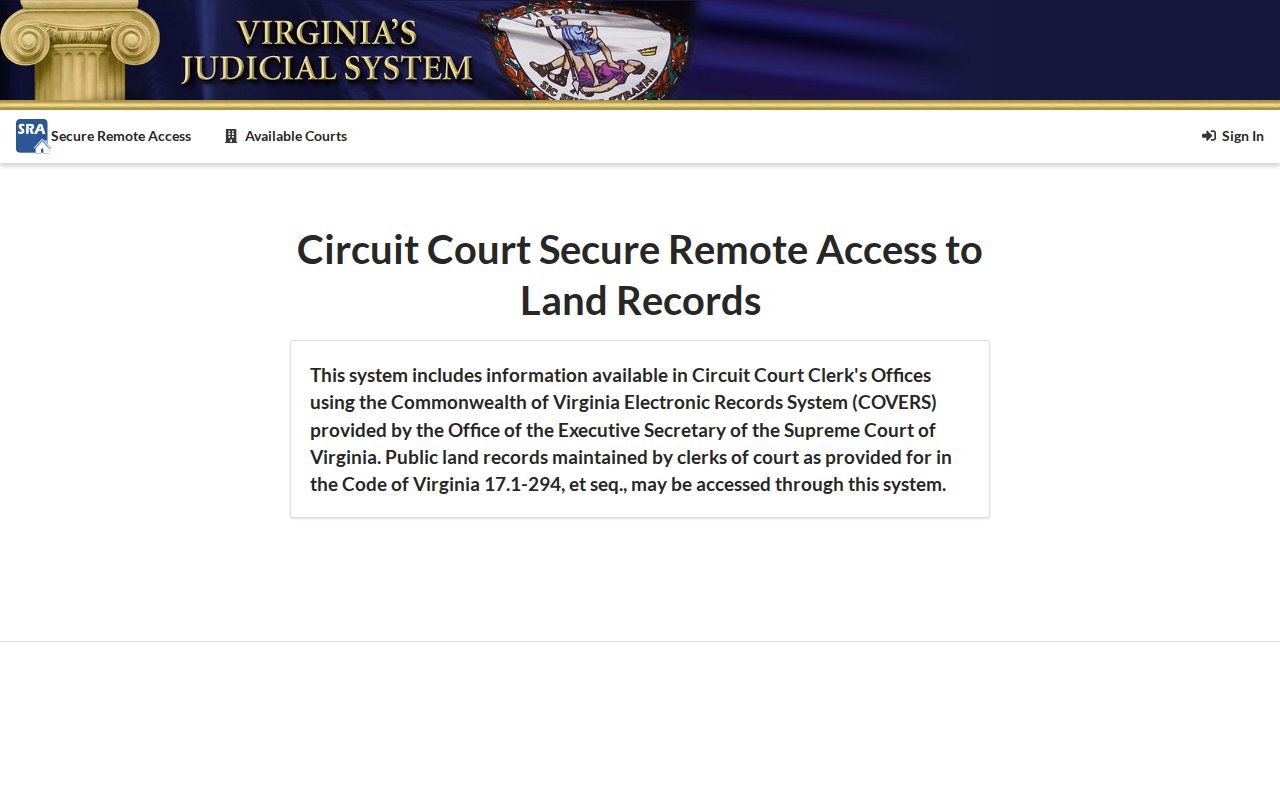
The Virginia Secure Remote Access portal opens with a statewide court selector. Pick the Petersburg Circuit Court locality from the list, then search the available land-record index. The public SRA description states that index-only access is free wherever a clerk enables it. Images go only to subscribers each clerk approves, under an agreement with applicable payment. Petersburg's online index start year and image cutoff are not published on the SRA pages.
The statewide Virginia land-record index shows the entry route for reaching a locality's available records. From any result, keep the instrument number. Also keep the book and page, recording date, names, and legal description. Contact the clerk or use a public terminal when the image is not available. Confirm current copy and certification fees before requesting a mailed or certified document.
Treat the index as a finding aid only. The image or certified clerk copy is the recorded instrument to review.
Free Index, Gated Deed Images
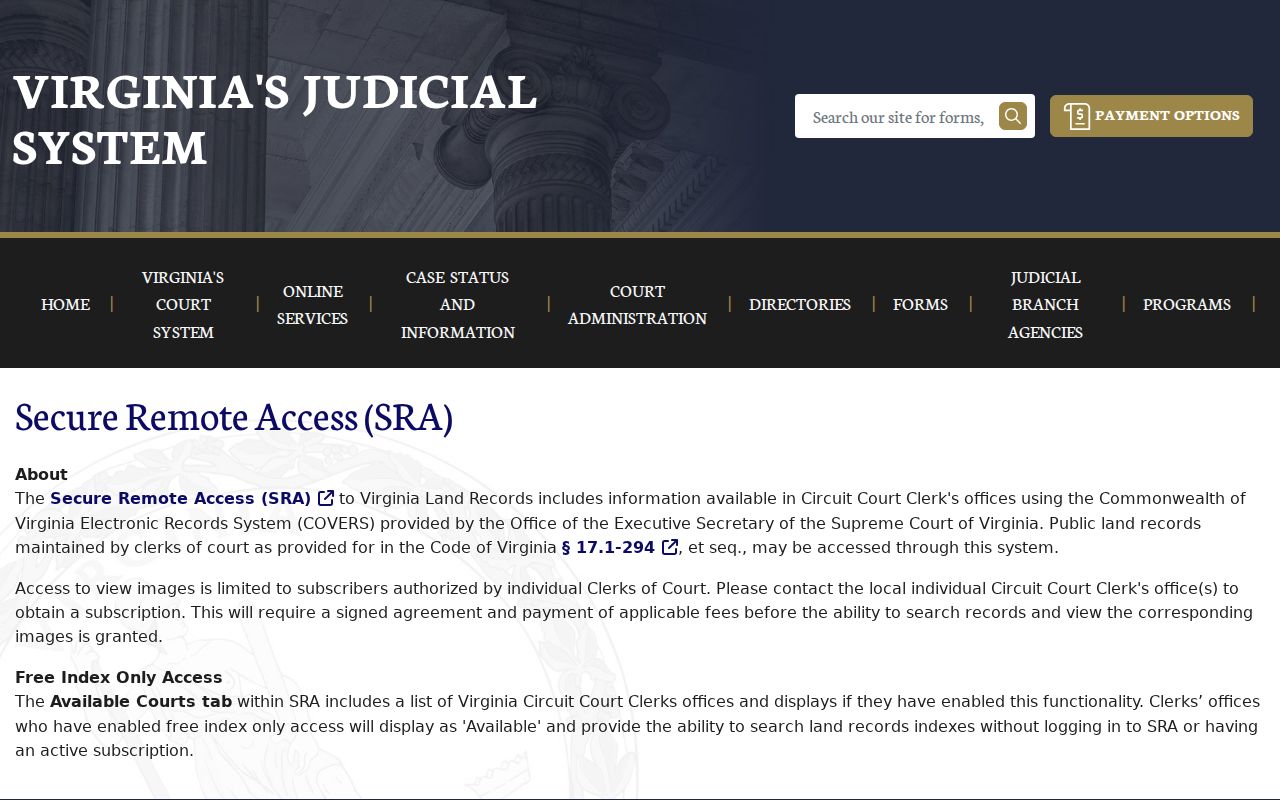
Virginia's land-record setup separates discovery from image access. A person can locate a deed in a free index. Yet a clerk-authorized subscription is needed to view the full instrument remotely. The online description gives no Petersburg subscription price or local agreement terms. Ask the Circuit Court Clerk which options apply. Don't assume an index result includes the deed image.
The statewide courts page spells out the distinction in its SRA access rules. A result still has value without an image. Capture the parties, date, instrument or book-page reference, and description. Then request the record at the clerk counter. An approved service can pull the record with that citation. The chain of earlier owners matters too. The backward tracing method sits in the Petersburg former-owner record route.
Before relying on any document, compare its parcel description to the current assessment card. A name match alone is not enough.
Following Petersburg Grantors and Grantees
A grantor conveys the interest; a grantee receives it. Read every deed result in both directions. The newest grantee is often the next name to search as a grantor. The prior grantor can be searched as a grantee to find an earlier acquisition. The chain holds together only when names, legal descriptions, and references are checked together. A same-name hit proves little by itself.
- Find the latest deed with the current owner as grantee and confirm its parcel description.
- Record the grantor, instrument number or book and page, and date.
- Search that grantor as a grantee to locate the instrument by which the prior owner acquired the parcel.
- Repeat until the index ends or the citation points to an older deed book or archive source.
- Grantor
- The party who conveys the interest described in a deed.
- Grantee
- The party receiving that interest.
- Chain of title
- The ordered conveyances and related instruments tied to the same land.
- Book and page / instrument number
- Clerk references used to retrieve a recorded document; preserve the exact form shown.
Older Petersburg Deed Books
The public SRA landing pages do not state when Petersburg's online index begins, so no coverage date can be promised. If an instrument does not appear online, ask the Circuit Court Clerk about the local cutoff, deed books, and public-access terminals. The clerk's published address is 7 Courthouse Avenue, with listed hours of 8 a.m. to 4 p.m.; confirm before travel, since courthouse plans have been discussed in public meetings.
The Library of Virginia's Petersburg finding aid holds local court, land, tax, fiduciary, and will material on microfilm. Its catalog lists chancery order books for 1849-1855 and 1855-1865, plus Sanborn maps and a Mutual Assurance Society lien book. These are related historical tools, not a stand-in for an unlocated deed book. Keep the old book/page or legal description so an archivist can identify the right reel or volume.
Deeds of Trust, Liens, and Releases
A Petersburg land-record search can surface more than simple deeds. Expect deeds of trust, releases, mechanic's liens, judgment liens, easements, and restrictive covenant records. Note the party roles and recording reference on each one. Releases are tricky. The clerk may index one under a lender or trustee instead of the owner of record. Search the beneficiary and trustee names too, and look for a later satisfaction that cleared the claim.
Virginia's SCC offers a separate UCC search for financing statements. A UCC filing is not automatically a lien against the parcel. Fixture filings in particular need legal review before you treat them as secured real-estate debt. For enforcement questions, pull the actual docket or order. Use the Circuit Court case information route. Keep in mind that a recorded lien only gives notice of a claim. Priority and enforceability are decided elsewhere.
Estate and Court Conveyances
Title in Petersburg can pass through instruments beyond a standard deed. Executor deeds, administrator deeds, and commissioner deeds all move ownership. Judicial sales, survivorship, and other fiduciary conveyances do the same. Run separate searches for the decedent, the estate, the fiduciary, and the purchaser. The probate file explains who had authority. The land record shows which instrument touched the parcel. Expect the assessor to keep listing a decedent or estate until the Land Book catches up.
Foreclosure evidence works the same way. A deed of trust, lis pendens, complaint, order, sale notice, and trustee deed each answer a different stage. Each one answers a different stage of the process. A delinquency or pending suit alone never proves title transferred. Always confirm the post-sale deed or court order and record its citation.
Carry a Petersburg Deed Citation Across Systems
When the SRA index points to a likely instrument, copy the full citation. Include the party names, recording date, instrument number or book and page, and the legal description. Do this before you close the result. An address helps you orient. But an old deed may describe a lot, a prior street name, a predecessor town, or a party rather than a modern situs. That citation is what the clerk needs to pull the same instrument if its remote image is unavailable.
Next, compare the land described in the instrument with the current CivQuest card. The City's sample card labels parcel 011250001 as “104 CITY HALL 150 X 99.” It also lists the map number apart from its address. The lesson is simple. Match the land description and parcel reference instead of trusting a person or street string. A label like “Olde Town (Not Platted)” is no substitute for a deed or recorded plat.
For a chain review, sort the instruments by recording date. Then follow each grantee into the grantor slot of the next conveyance. Watch for estates, trusts, trustees, executors, and court-appointed commissioners. The name in a later instrument may not resemble the prior owner at all. If a reference falls outside the online image range, take the clerk's citation and request the paper or book record. Treat the index as a locator only. Read the instrument itself before concluding what interest it conveyed.
Requesting a Petersburg Deed Copy
When SRA shows no image, contact the Petersburg Circuit Court Clerk's land-record office with the grantor and grantee names, recording date, instrument number or book and page, and legal description. The city FAQ routes deed, lien, plat, and survey copy requests to that office. The clerk sets the copy fee and accepted payment method, so ask before mailing a request. Certified-copy handling is a clerk question too.
Write down what you requested and the citation the clerk returns. If nothing turns up under a modern address, try the parcel description, an old locality name, or an earlier owner. Petersburg records predate the current online system, and no exact image cutoff is published. A missing online result never means no deed exists.
Recorded, not guaranteed. An index shows recorded references, not every possible claim or the legal effect of each instrument. A title professional reviews the complete chain and exceptions.