
Owner Fields on a Petersburg Parcel Card
Finding the current Petersburg property owner starts with the assessor's Owner Name field. That entry belongs to an annual roll, and a fresh deed can be recorded before the tax record catches up. The Land Book updates once a year. So compare the roll against the most recent deed in the clerk's index. Mailing and property addresses are separate too. A bill sent elsewhere proves nothing about who holds title. Match the parcel number and legal description across assessor and clerk records. What you want is a dated owner-of-record answer. That beats a guess about occupancy or title exceptions.
| Owner Name | Name carried on the assessor parcel card |
|---|---|
| Owner Mailing Address | Address used for tax correspondence |
| Property Address | Situs location of the parcel |
| Map Number | Parcel key to copy exactly, such as 011250001 |
| Legal Description | Written land description that links the card to a deed |
| Deed Reference | Confirm in SRA or with the Circuit Court Clerk |
The sample card has limits. It will not show every current owner, all vesting terms, or a last deed reference. Treat the owner field as the assessment-roll answer for its own update date. A mailing address may belong to a fiduciary, a tax agent, or an entity office. It is not proof the owner lives there. The Land Book explanation is available from the City Assessor.
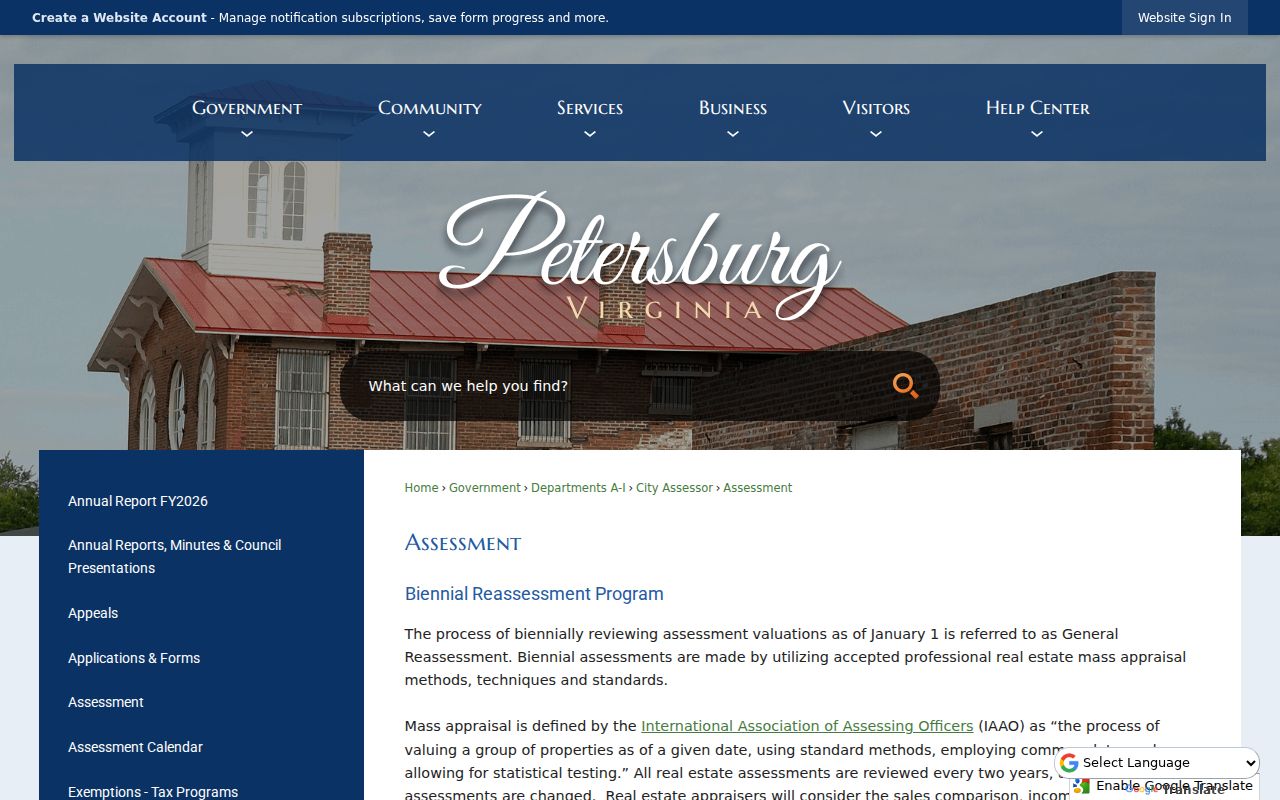
Before treating the card's name as current title, compare its legal description with the newest recorded deed.
When Petersburg's Owner Roll Updates
Petersburg builds an annual Land Book and reassesses real estate every two years. The Land Book drives the tax bills. The Circuit Court Clerk records the deeds. Those tracks move separately. So a conveyance can appear in the land index before the next roll or mailing file shows it. No standard lag exists, so never promise a fixed number of days. For a recent sale, use the newest deed. Set its recording date beside the Owner Name field and the bill date. If they disagree, ask the Assessor about its roll and Collections about the bill. Keep the question tight: one parcel, one period.
Verifying the Current Petersburg Owner
To confirm a present owner, match the assessor roll to the latest conveyance. The conveyance appears in the recorded land index. The grantee on a deed receives the interest it describes. The grantor conveys it. Vesting language may reveal that an entity, a trustee, an executor, or several parties hold the interest. Read the full instrument instead of inferring the arrangement from a tax-card name.
- Open the parcel in CivQuest and copy the Owner Name, map number, and legal description.
- Select Petersburg Circuit Court in Virginia SRA and search the name as grantee.
- Check the newest matching deed's recording date, vesting language, and land description.
- Compare the result with the Land Book and bill period; ask the relevant office to explain any mismatch.
- Owner of record
- The owner name shown in a particular assessor or recorded instrument entry.
- Vesting
- The wording that describes how the grantee takes the interest.
- Registered agent
- A public contact for an entity, not automatically its beneficial owner.
Entities on the Owner Record
A Petersburg owner-of-record entry may name an LLC, trust, estate, or fiduciary. Take the exact spelling from the card. Search that form in the deed index. Virginia SCC CIS can supply entity status. It can also supply formation date, registered agent, principal office, and filing history. Those details identify a business record. But the deed remains the land record tying the entity to the parcel. Estate names can linger on the roll while a fiduciary process runs. Search the decedent, the executor or administrator, and the estate name across the land records. Search them across the probate records too. If a new deed or court order was recorded, compare its legal description with the card. Do this before assuming two similar names cover the same property. Virginia SCC CIS is the state's public entity search.
The 2025 Petersburg Billing Mismatch
In May and June 2025, the city reported a mailing problem. About 500 fourth-quarter real-estate bills went to former owners. An incorrect file was used. Some mailing addresses were wrong as well. Replacement bills went out. The event involved the billing file, not a ruling on title. It shows why a name on a bill should never replace the deed check. When the owner field and the bill do not line up, start with the details. Compare the parcel number, the recording date, and the tax period. Ask Collections to verify the account and the Assessor to verify its roll. The city's correction announcement gives the local example.
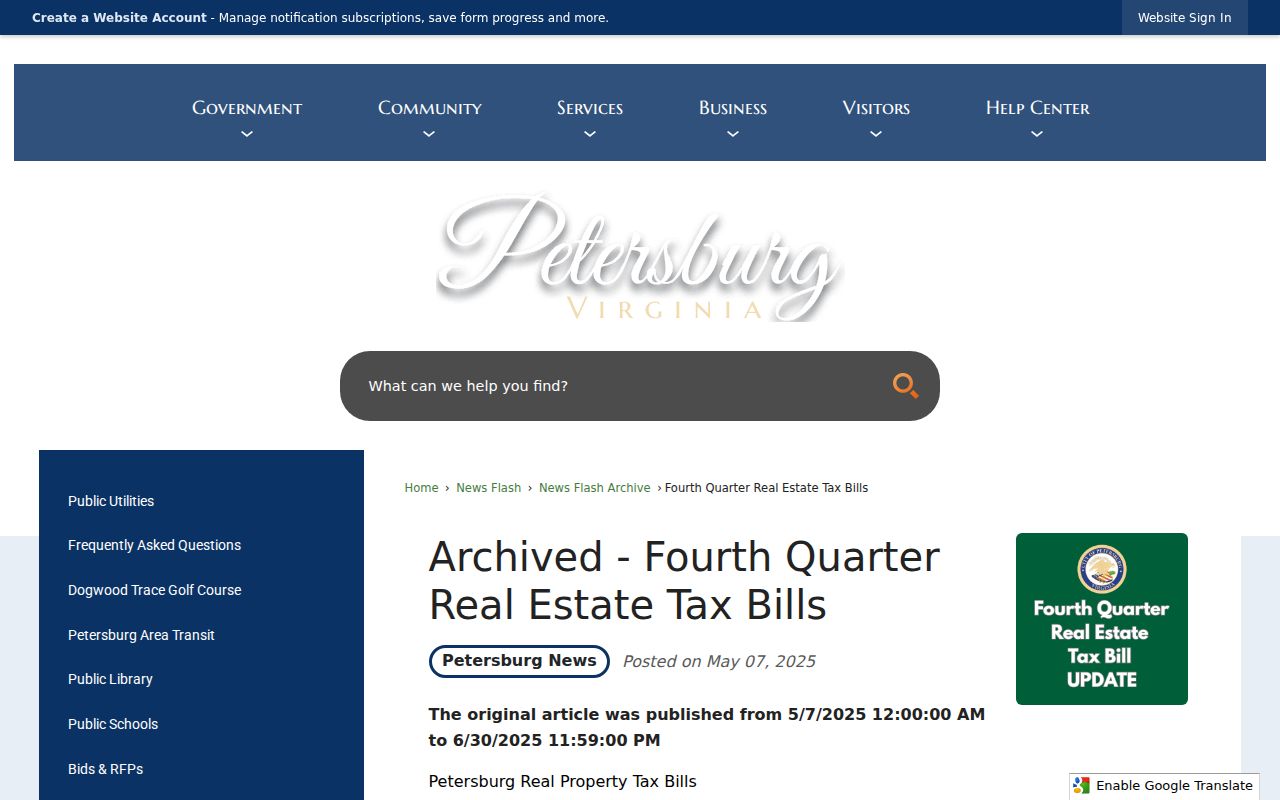
Use the current deed to confirm a conveyance and Collections to confirm the bill.
What the Current Owner Card Leaves Out
The public City Hall sample lists an Owner Name and parcel description. It stops short of a full sale history, a deed image, or a complete title chain. A blank sale field does not prove no transfer occurred. Search the land index by the current name and description, then review the newest instrument. Keep the recording date with the owner name. That way the answer carries a clear time reference. The same card reads “Olde Town (Not Platted)” beside its legal description. Courthouse historic-district labels sit nearby. A subdivision label may simply be a local assessment category. It does not alter the instrument that vests the owner. Nor does it substitute for the recorded plat.
Date the Current Petersburg Owner Result
Date the result. A solid current-owner note records the parcel number, the owner name on the assessment card, and the instrument number or book-and-page citation for the newest deed you found. Note when you checked each system too. The Land Book name and the latest recorded conveyance can disagree without either source being wrong, because the roll and the deed records update on separate schedules.
Match the deed's legal description against the CivQuest card rather than trusting the street number alone. The published sample shows map number 011250001 with a written description listed apart from its address. Zoning, assessment neighborhood, and historic-district fields all appear on the card. None of them reveals whether a newer deed was recorded. When the deed names a prior owner, an estate, a trustee, or an entity, follow that party role through the index and keep the recording citation with your notes.
The tax account offers a second timing check. A bill still addressed to a former owner does not undo a recorded transfer. Likewise, a fresh owner name on the tax roll says nothing about whether any payment posted. Petersburg's 2025 billing correction involved a mailing-file error that hit roughly 500 fourth-quarter bills. When something mismatches, ask the Assessor about the roll, Collections about the account, and the Circuit Court Clerk about the recorded instrument. Write down each office's answer alongside the record date it gave you.
Virginia Owner Filing Alerts
Virginia's 2026 property-alert statute lets clerks with qualifying electronic systems offer free enrollment by name, tax map, or parcel number. A notice may include the instrument number, type, recording date, and the matched name or parcel. That is a useful flag. It is not a ruling on validity. An alert never supplies a title opinion either. Petersburg publishes no enrollment page for the service. Ask the Circuit Court Clerk whether local signup exists and what a notice contains. Any recorded instrument still has to be read and matched to the parcel before you rely on it.
Mailing Address and Owner Privacy
The owner mailing address handles tax correspondence and often differs from the parcel's location. It may belong to an out-of-town owner, an LLC, a trustee, or a tax representative. Virginia's Address Confidentiality Program gives eligible participants a substitute address with mail forwarding. Do not try to identify a protected residence through another public-record route.
Lawful use. Use a Petersburg owner record for a legitimate property matter and respect protected-address rules. Never use a mailing address to stalk, threaten, or harass a person.