
Former Owners Along the Petersburg Record Trail
Begin with the newest deed or the parcel's legal description. Then move from grantee back to the grantor who conveyed it. Petersburg deed records carry no single published online start year, so any coverage table has to separate known collection dates from an unknown cutoff. A blank date is a question for the clerk. Never invent one.
| Source | Years It Covers | Where Held | What It Shows |
|---|---|---|---|
| Virginia SRA land index | Local start year not stated | Petersburg Circuit Court Clerk / online index | Grantor-grantee references and recording details |
| Circuit deed and court books | By volume; online cutoff unconfirmed | Circuit Clerk and Library of Virginia finding aids | Recorded conveyances and court-related transfers |
| Sanborn maps | 1903; 1921-1934 listed | LVA reels 124/125; library collections | Building footprint and block context |
| Directories and newspapers | Directories from 1860; newspapers from 1784 with gaps | Petersburg Public Library research room | Address, occupant, business, and historical leads |
The land index locates a conveyance. A probate file documents a fiduciary's authority. City directories and newspapers can tie an old street address to an occupant. Then return to the deed books to prove title. Sanborn sheets reveal structures and patterns of use. They do not name every owner.
The Library of Virginia describes the statewide SRA land-record index as its remote route. Its catalog is a separate archive search, not a substitute for the clerk's local index.
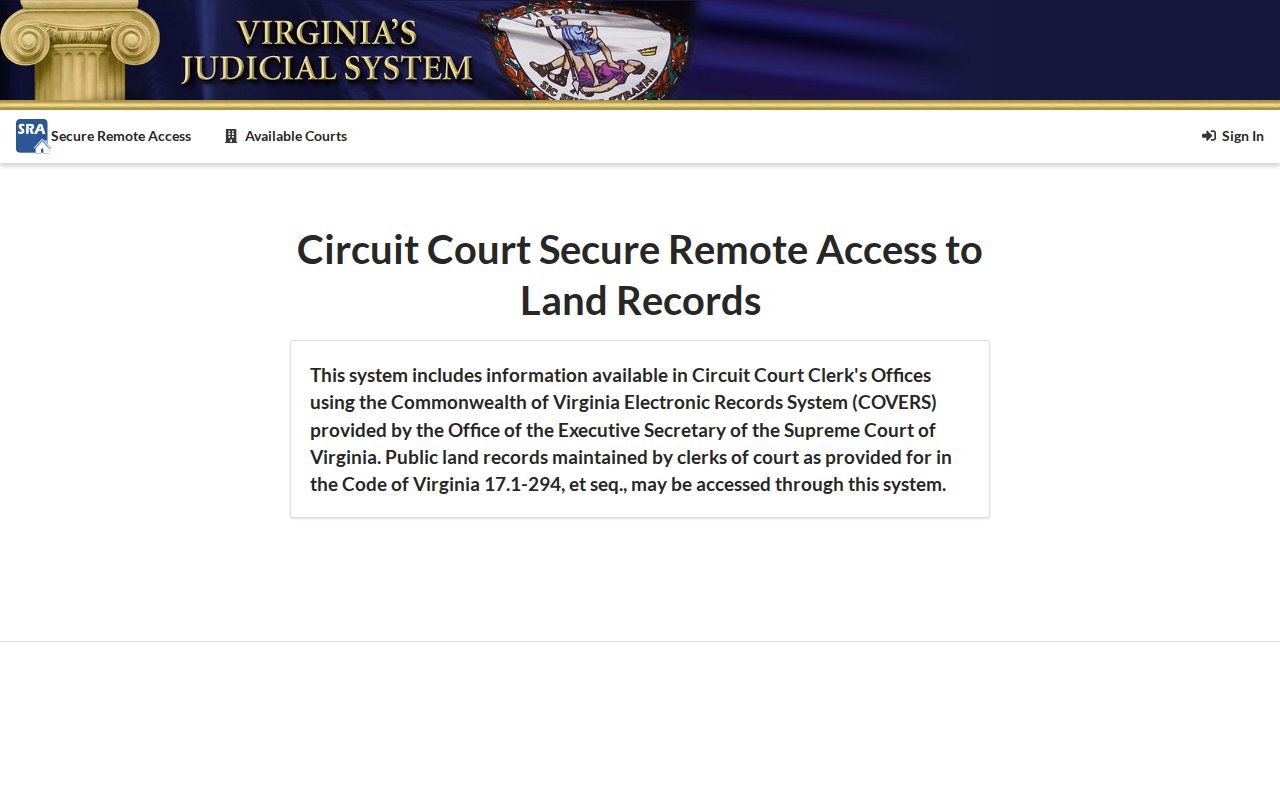
Save the exact reference from your index entry. A clerk can then retrieve the instrument if an online image is unavailable.
Index Hits and Deed Images
Virginia SRA gives free index-only access when a clerk turns it on. Images go only to subscribers the clerk authorizes, sometimes with an agreement and payment. Petersburg's earliest online index year is not stated. Neither is the imaging cutoff. A missing result may not mean a missing deed. Ask the Circuit Court Clerk which books, dates, and document types are searchable. The state courts explain this access split on the official SRA access page. It shows why a researcher can hold a citation yet never see the image. Index hits still point somewhere.
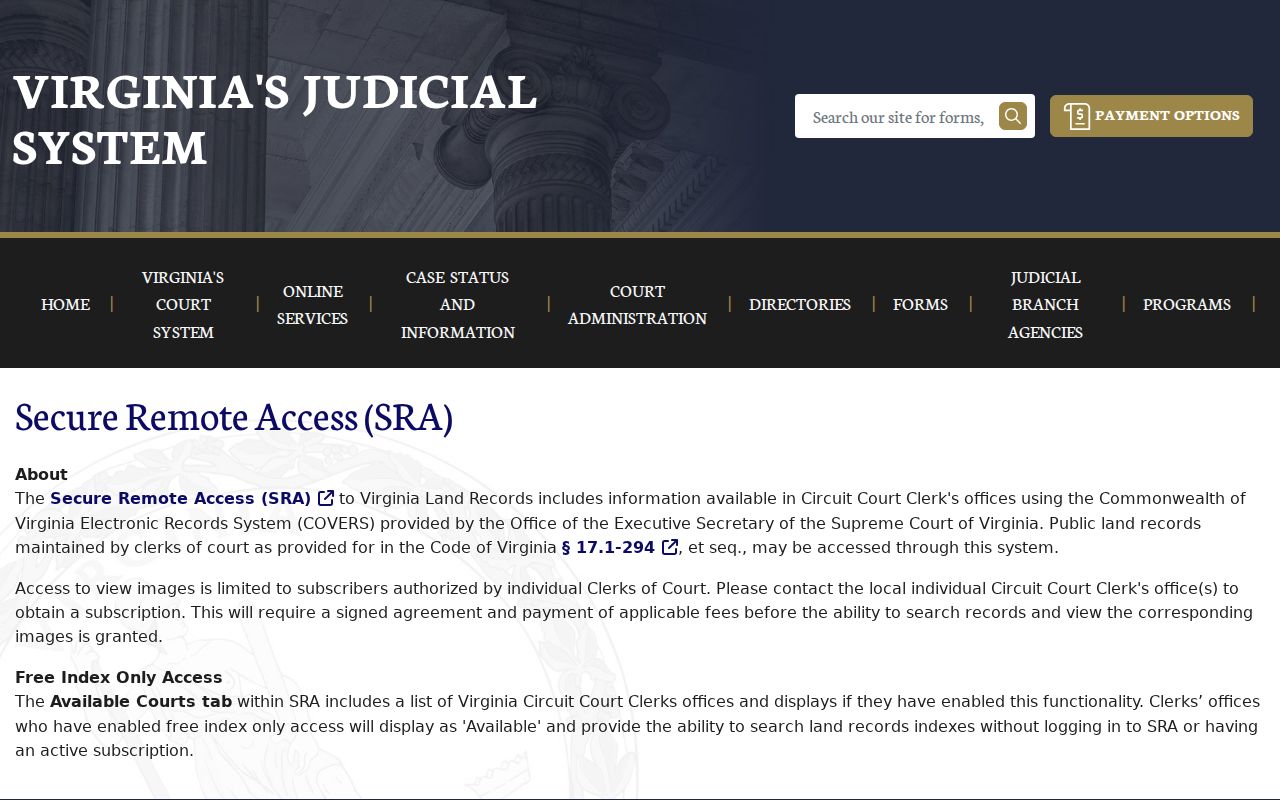
Take the index citation to the clerk counter for help. You can also ask the office about an approved image subscription.
Walking the Petersburg Chain Backward
The latest deed holds two links. The grantee marks the current owner, and the grantor marks the one before. Search that prior owner as a grantee next. Record the date, parties, legal description, and book-page or instrument reference at each step, since older deeds favor the written land description over a parcel number. Older locality names appear too.
- Locate the newest deed with the current owner as grantee and match the legal description.
- Write down the grantor and the complete recording reference.
- Search the grantor as a grantee to find the earlier acquisition instrument.
- Continue until the online index ends, then ask for the deed book or archive citation.
- Grantor
- The party who conveyed the described interest.
- Grantee
- The party who received it.
- Chain of title
- The ordered sequence of instruments affecting the same land.
- Legal description
- Written land identification that can remain useful when an address changes.
Library of Virginia Petersburg Reels
Local history material at the Library of Virginia sits on Petersburg microfilm, and the catalog sorts it into land, court, fiduciary, tax, wills, marriage, military, and miscellaneous records. Sanborn Insurance Maps from 1903 and 1921 through 1934 appear on reels 124 and 125. Chancery order books cover 1849-1855 and 1855-1865, and a Mutual Assurance Society lien book spans 1900-1956. Those dates mark what each collection holds. They do not describe Petersburg deed coverage overall.
Some reels cannot travel by interlibrary loan. Read the item notes in the catalog before you plan a visit or a request. To pin down a reel and its collection, start with the Petersburg microfilm finding aid.
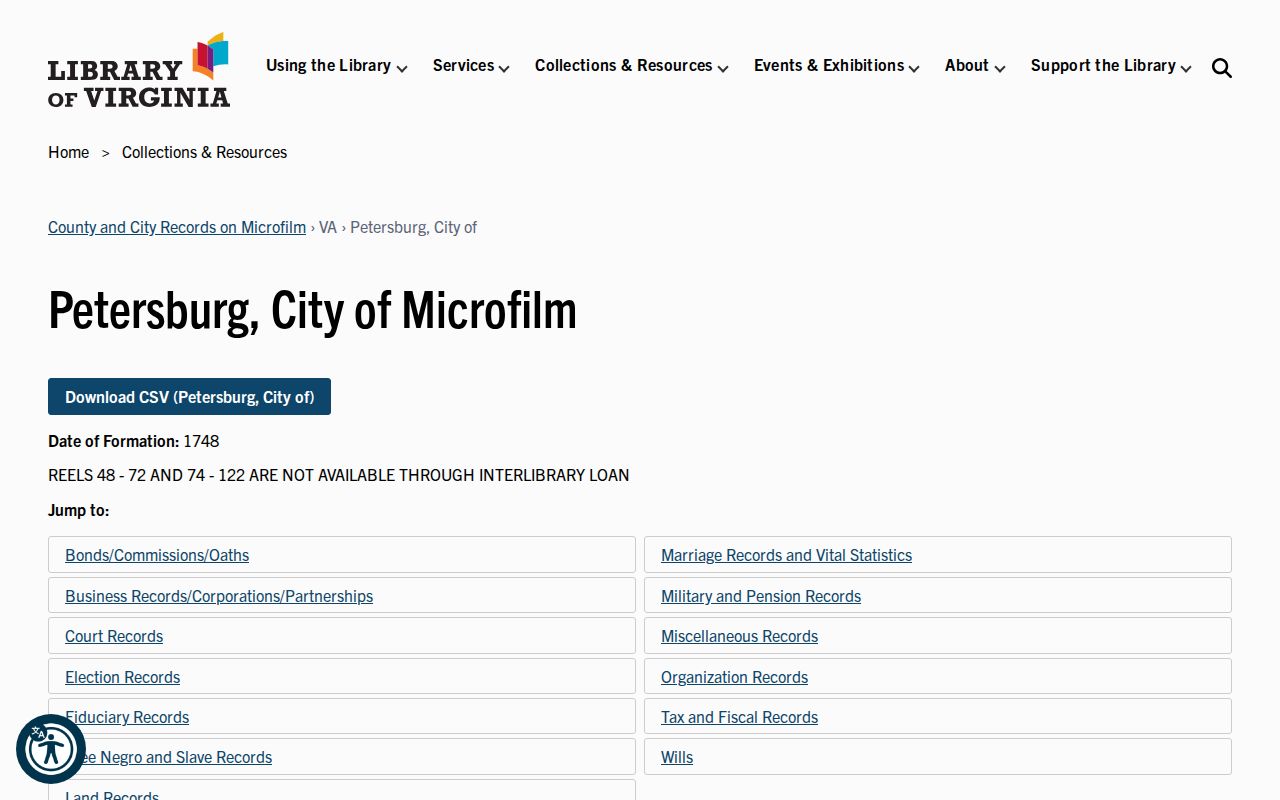
Microfilm broadens the story; a recorded deed proves title.
Directories, Sanborns, and Newspapers
The Petersburg Public Library research room reportedly holds city directories from 1860 forward, the 1877 Beers map, Sanborn maps, and newspaper microfilm reaching back to 1784, with Civil War and some early nineteenth-century gaps. A directory pairs a street address with a name. It may also list a business, spouse, occupation, or an owner-renter abbreviation. Abbreviation keys vary by volume. Check the instructions inside each book.
Sanborn maps show a building's footprint and its neighborhood in a given year. Newspapers may carry notices tied to estate administration or property sales. Neither source transfers title. Confirm any name through probate records and the Circuit Court land index. The Petersburg Public Library page offers catalog and contact details.
Keep an address-and-year note for each lead before returning to the legal record.
Pocahontas Island Address Context
Pocahontas Island shows how neighborhood history can clarify an old property reference. The town of Pocahontas dates to 1752. Petersburg absorbed it in 1784. Petersburg had a large free Black community by 1860. More of its members lived on Pocahontas Island than in any other neighborhood. Wharves and tobacco factories fed river trade. A 1993 tornado damaged historic buildings. The Jarratt House, from about 1819, is the oldest survivor. Use these facts to steer searches of maps, newspapers, cemeteries, and archives. Never use them to guess a lot's owner. Keep the old place name and legal description. Do this when a chain crosses an annexation or street-name change.
Translate Older Petersburg Property References
An old deed may name a place that no longer exists on the parcel card. Petersburg formed in 1748, and the town incorporated in 1784, per the city's public history. Pocahontas was established in 1752 and later folded into Petersburg. So an early instrument might cite a predecessor town, a neighboring county, or a vanished locality. It may not cite a modern address at all. Copy the wording exactly as recorded. Note which jurisdiction held the record at the time it was made. That detail determines where the original deed records sit today.
The legal description is the bridge between eras. Match lot, block, acreage, adjoining owners, and any plat reference across the deed records. Then confirm whether the street name or number changed over time. A modern address search will not pull a nineteenth-century deed. The assessor's current parcel number helps with present-day navigation. The city publishes no decoder, though, that converts an old street reference into that parcel number.
Gaps in the recorded chain call for archive context. The Library of Virginia's Petersburg court-record collection can surface court, tax, directory, map, and newspaper references. The local public library's historical resources can do the same. A city directory or Sanborn map may place a building or an owner of record in a given year. It is not proof of title. Keep the source type and date visible. That way a historical clue is never mistaken for a deed.
How Far Petersburg Ownership Records Reach
How far back can you trace an owner of record? The Library of Virginia lists Petersburg as formed in 1748. City planning material, though, dates town incorporation to 1784. Older deed records may therefore live with a predecessor locality or a neighboring county. Petersburg does not state a cutoff for its online deed index. And do not blame a missing result on a courthouse fire. None appears in the record.
When the chain stops, write down the last verified book and page. Include the date, grantor, grantee, and legal description. Then ask the Circuit Court Clerk to search its volumes directly. Follow up with the Library of Virginia catalog. Also check local library holdings for court, tax, map, and newspaper evidence. Mark the break as unresolved until an instrument closes it.
House history, lawful purpose. Use former-owner research to understand a building, deed chain, or property transfer. Do not use historical names or addresses to track or harass a living person.