
Petersburg's Address-to-Owner Route
Petersburg keeps a short trail from address to owner. Start with the street number in the parcel system. The card that returns shows the Owner Name field. CivQuest splits Property Address from Owner Mailing Address. Its Owner Contains filter lets you search a partial person or entity name as a second entry point. The map number and legal description anchor the search to the land itself. A similar name cannot pull you toward the wrong parcel.
A just-recorded deed is still the best confirmation of a recent conveyance. The Land Book reflects the assessor's view of ownership for assessment and billing. It can trail a new instrument or keep an estate name on the roll. When the two disagree, note both dates. Then ask the records custodian which file carries the update.
- Search the address in Petersburg CivQuest and open the matching parcel.
- Copy Owner Name, both addresses, the map number, and the legal description.
- Search the owner as grantee and the prior party as grantor in Virginia SRA; confirm the newest deed.
- If an LLC appears, use Virginia SCC CIS for entity context. Do not treat its registered agent as the landowner without a deed.
The Owner Field on a Petersburg Parcel
A name on a parcel card is a starting point, not the final word. The City Hall example pairs an owner field with an owner mailing address, property address, parcel number, legal acreage, legal description, zoning, property use, and district labels. The sample parcel number is 011250001. Its "Olde Town (Not Platted)" subdivision label sits beside a legal description, so the category should not be mistaken for a recorded plat.
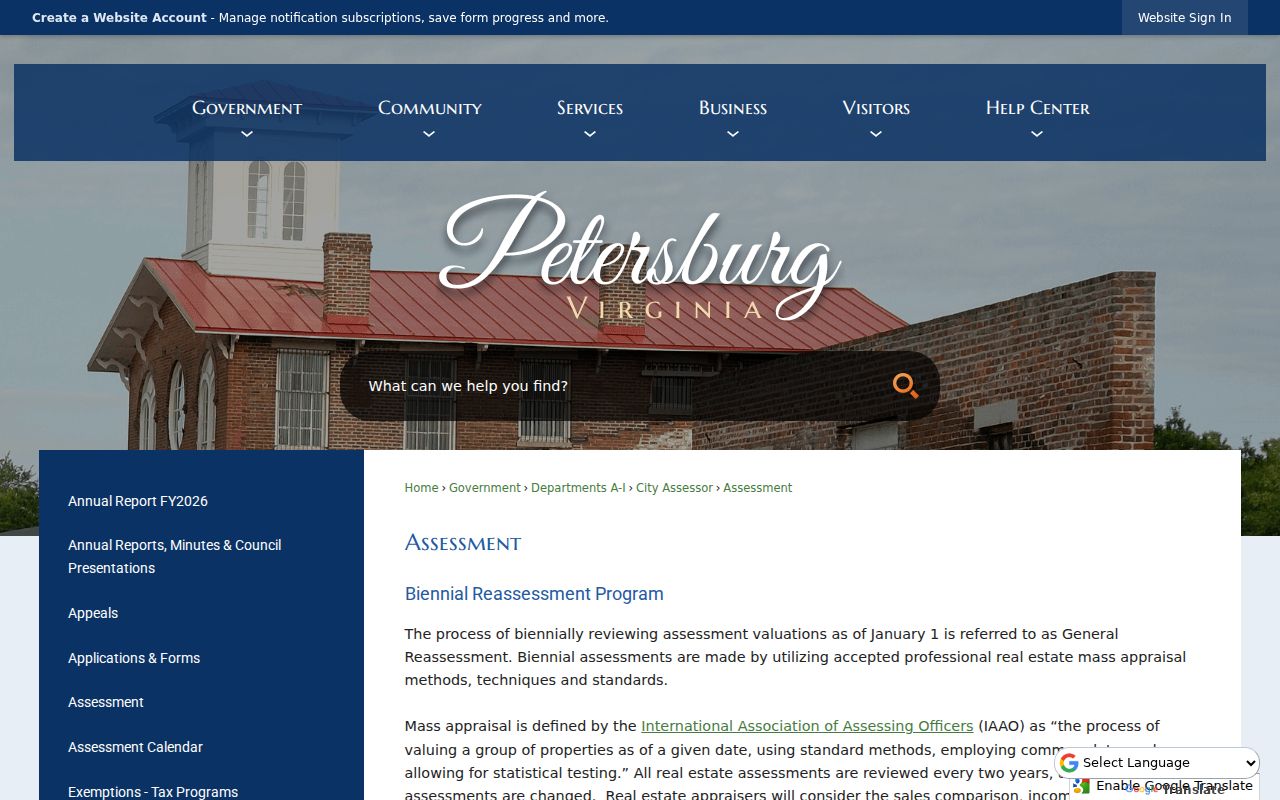
The City Assessor's Land Book covers owner name, legal description, assessment, and taxes levied. That makes the roll a useful first answer to a who-owns question. The recorded deed remains the confirmation for a transfer, though, because the card and the instrument serve different purposes and update on different paths. The City Assessor explains the Land Book at its assessment page.
Copy the legal description too. The owner name alone will not tie a deed search to the parcel.
- Owner of record
- The name shown on the assessor roll or recorded instrument for the relevant date.
- Grantee
- The party receiving an interest in a deed.
- Situs address
- The address where the property is located.
- Mailing address
- The address where tax correspondence is sent; it can be elsewhere.
Owner Evidence Across Petersburg Records
A Petersburg owner lookup pulls from four places. The assessor ties a name to the parcel roll. A deed names the grantor and grantee. The GIS parcel card places the land, and for an entity the Virginia business registry describes its public filing history. Each source answers a different slice of the question.
| Source | Owner Info It Gives | Access |
|---|---|---|
| Assessor / Land Book | Owner Name, mailing address, parcel description, assessment | CivQuest and City Assessor |
| Circuit land index | Parties and reference for a recorded transfer | Virginia SRA; images may require clerk approval |
| Virginia SCC CIS | Entity status, agent, office, and filing history | Public business-system search |
| City GIS | Parcel shape, map number, and nearby context | City parcel viewer and GIS layers |
These records name legal or assessed parties, not residents. A mailing address can belong to an out-of-town owner, a fiduciary, or a tax agent. An LLC's registered agent receives notices. That role is not beneficial ownership, and a parcel card cannot tell you who lives at the address.
Confirm the Latest Petersburg Deed
Virginia SRA is the remote starting point for Petersburg land-record indexes. Search the current owner as grantee. Review the newest matching deed. The grantor name tells you who conveyed the property. Compare its legal description and recording reference against the parcel card. The system can expose an index while limiting deed images to subscribers authorized by the individual clerk.
Petersburg's online index cutoff and local image start date are not stated. Ask the Circuit Court Clerk about the public terminal, deed books, and copy process when a deed stays offscreen. A name-only match can land on the wrong parcel. Compare the map number and description first.
LLCs, Trusts, and Estates
The owner field may hold an entity or a fiduciary rather than a person. Search the exact form shown on the assessor card. Keep the punctuation and words such as Estate or Trustee. For an LLC, SCC CIS can show status and formation date. It can also show registered agent, principal office, and filing history. A recorded land instrument still has to connect that entity to the parcel. Otherwise it proves nothing about ownership.
Inherited property can split across several records. The will, the qualification, and the court order may all be separate documents. The executor or administrator deed may be separate too. Search the decedent, the estate, and the fiduciary. The assessor may keep a decedent's name on the roll until a new instrument is recorded. The Land Book then has to catch up. An obituary hit is a clue, not a conveyance.
Virginia SCC CIS is the official starting point for public entity filings.
When Petersburg's Roll Falls Behind
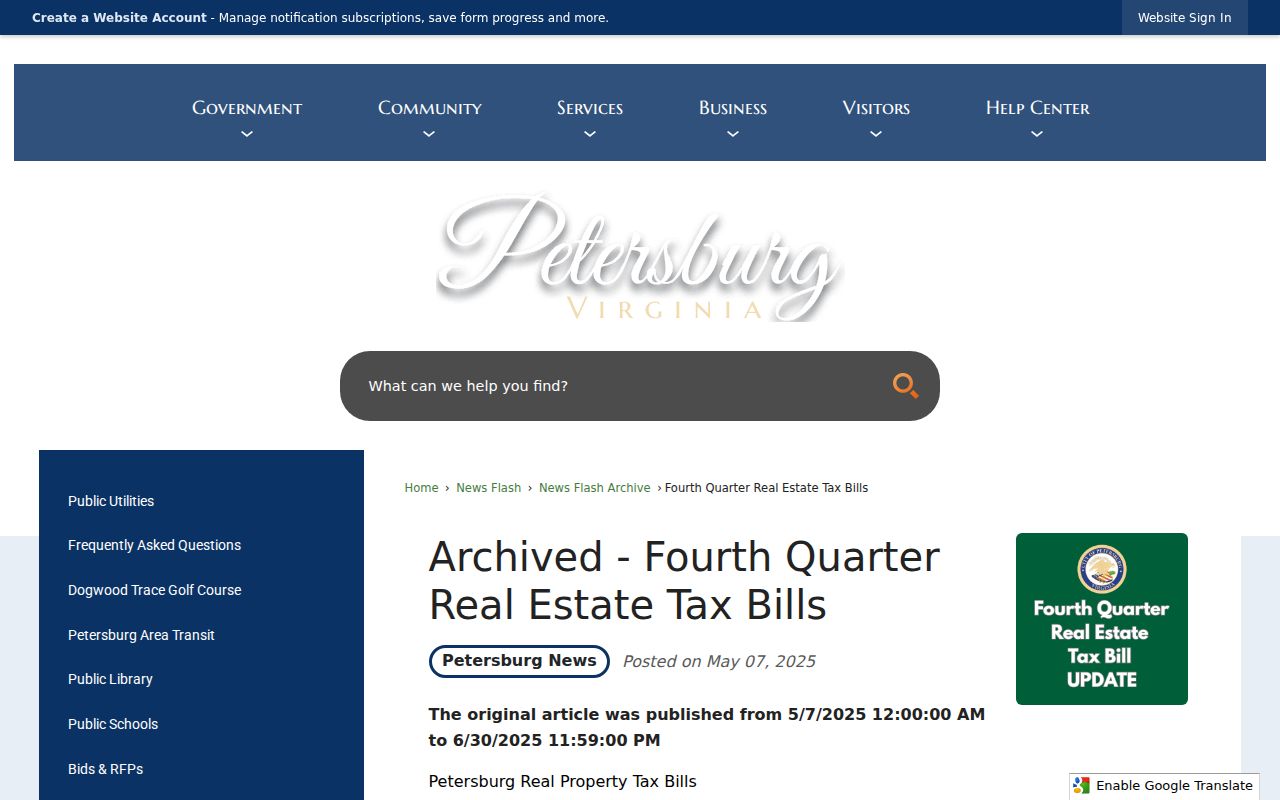
In 2025 the city reported a mailing mix-up. About 500 fourth-quarter real-estate bills went to former owners after the wrong file was used, and some addresses were wrong too. A tax mailing can lag or carry an error. That mix-up is a local reason to verify a recent sale in the clerk's land index.
Put four items side by side. Check the latest deed recording date, the Owner Name field, the tax period, and the bill address. Ask the Assessor about the roll. Ask Collections about the account. The city mailed corrected bills and told recipients to disregard the original notices in the 2025 correction notice.
Use the deed for a conveyance and the tax account for the bill status.
Virginia Property Alert Notices
Virginia Code §17.1-258.3:1, the 2026 version, sets up a property-alert framework. It applies to clerks whose electronic land-record systems qualify. Enrollment is free by name, tax map, or parcel number. Each notice can carry an instrument number, the instrument type, the recording date, and the matched name or parcel. That gives an owner an early heads-up about a new filing. Still, an alert is not a title review. It will not stop a forged document from being submitted.
Petersburg publishes no enrollment page for this system. Ask the Circuit Court Clerk directly whether the alert portal is active locally. Ask also how to sign up. A statewide statute does not guarantee that every clerk's system is ready.
Build a Defensible Petersburg Owner Check
Write the answer as a dated record result. Identify the parcel. Name the owner field you checked, and give the latest deed reference you found. The City Assessor's card supplies the current roll name and legal description. The Circuit Court Clerk's land record shows the recorded conveyance. If the two disagree, compare the recording date against the roll and bill periods. Do not call one record wrong yet. Petersburg keeps an annual Land Book and a biennial reassessment. The roll name does not change the instant a deed is recorded.
Keep situs and mailing addresses in separate notes. A tax mailing address may belong to an owner living elsewhere. It could name an LLC, a trustee, or a tax representative. It never proves the recipient occupies the property. The 2025 Petersburg bill correction shows why. The city said roughly 500 fourth-quarter bills went to former owners after an incorrect file was used. The city then mailed corrected notices. A mailing record deserves an independent check.
If the name is an estate or entity, keep the exact spelling. Search the fiduciary or organization separately. An SCC filing can reveal an entity's public status and registered agent. But only a land instrument connects it to the parcel. Record the source and date for each fact. Refer any title or ownership dispute to the appropriate professional. A public owner search can locate records. It cannot establish every beneficial interest or the rights of occupants.
Limits of an Owner Search
A who-owns search identifies names in accessible public records. It does not confirm occupancy. It does not reveal beneficial ownership behind every entity. It also does not guarantee clear title or establish a property's current condition. Virginia's Address Confidentiality Program gives eligible participants a substitute address and mail forwarding. Do not try to reverse that protection through other records. Recorded instruments may also hold sensitive details that must be handled under applicable redaction rules.
Lawful use. Use Petersburg owner information for property research, title questions, and civic purposes. Do not use a name or mailing address to stalk, threaten, or harass anyone.